

Industrial borescopes have become a core tool in aviation maintenance because they provide a safe, efficient way to see inside complex components without major disruption to the aircraft or engine. When used well, a borescope inspection can confirm serviceability, document findings for review, and support faster decisions that protect schedule and safety. The technology has also expanded beyond simple viewing, with modern systems offering advanced imaging, articulation, recording, and measurement features.
For aviation professionals who are selecting equipment or building an inspection process, it helps to understand what an industrial borescope is designed to do, what features matter in the real world, and how to match a scope to common aircraft and engine tasks. Suppliers such as USA Borescopes support aviation teams with inspection tools and options that align with these demanding use cases.
What an Industrial Borescope Is and What It Is Not
An industrial borescope is a visual inspection device designed to look inside confined spaces through small access points. In aviation, those access points may include engine borescope ports, inspection holes, or openings reached after removing covers or panels. The basic goal is to inspect internal surfaces for damage, wear, corrosion, foreign object impact, cracking indications, or other conditions that influence airworthiness and maintenance decisions.
A borescope is not a replacement for every inspection method. It does not measure internal clearances like a dedicated gauge, it cannot always see hidden surfaces, and it cannot confirm material condition beneath a coating or deposit. Its strength is visual access. It helps technicians find and characterize surface conditions early, document them clearly, and decide what to do next without automatically moving to disassembly.
In practical maintenance terms, borescopes support three outcomes that matter every day:
- Quicker confirmation when components are serviceable
- Better evidence when findings require review
- Fewer unnecessary removals when clear visuals resolve uncertainty
The Main Borescope Types Aviation Teams Encounter
Industrial borescopes come in several categories, and each fits certain aviation tasks better than others. The right choice depends on access, required image quality, documentation needs, and whether steering is required to reach the inspection area.
Rigid borescopes
Rigid borescopes use a straight tube with an optical system. They are often used when access is direct and the path is not curved. Rigid scopes can produce crisp images and are valued for straightforward inspections where the viewing angle and access point align well with the target. They can be a strong choice for simple cavities, straight-line ports, and situations where the inspection route does not require steering.
The limitation is flexibility. If the path has bends or the technician needs to look behind structures, a rigid scope may not reach the right viewpoint without additional disassembly.
Fiberscopes
Fiberscopes use fiber optics to transmit an image through a flexible insertion tube. They can navigate tighter spaces than rigid scopes and may be selected for certain access challenges. In practice, fiberscopes can be useful when portability and flexibility matter, but they may involve tradeoffs in image quality and recording convenience compared with modern digital videoscopes.
Aviation teams considering fiberscopes often weigh access benefits against the need for clear documentation. If documentation and review are central to the workflow, many teams prefer digital capture.
Videoscopes
Videoscopes use a camera at the tip of a flexible insertion tube to capture digital images and video. In aviation, they are widely used because they support documentation, easy sharing, and consistent review. Videoscopes also tend to offer a broad feature set, including adjustable lighting, recording, and various viewing options.
For engine work, a videoscope can provide practical advantages in day-to-day operations:
- Faster capture of images and video for records
- Easier review by supervisors, QA, and engineering
- Better consistency across shifts because the evidence is visual and shareable
Articulation and steering basics
Articulation refers to the ability to steer the tip of the scope. In aviation, articulation is often the difference between seeing a surface once and being able to return to it reliably for a better angle. Steering allows technicians to look around geometry, inspect behind features, and hold a stable view for documentation.
Articulation also improves coverage. Without steering, technicians may miss areas that require a specific viewing angle. With steering, they can systematically inspect key surfaces while maintaining orientation.
The Specs That Actually Matter on the Hangar Floor
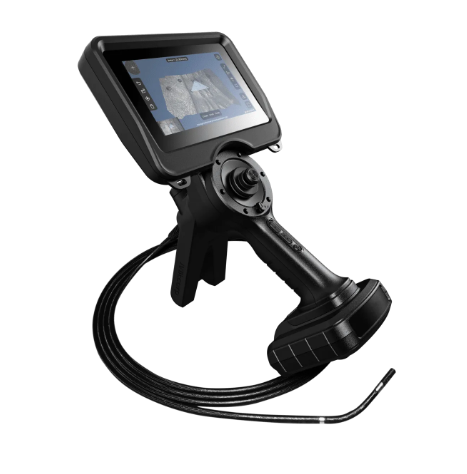
Spec sheets can be long, but a few specs tend to drive real outcomes in aviation inspections. The most useful approach is to connect each spec to a maintenance need, such as access, image clarity, repeatability, and documentation.
Diameter and working length
Diameter determines whether the scope can fit through a port and navigate the inspection path. A scope that is too large may not enter the port safely. A scope that is smaller may navigate more easily, but it may also require careful handling to maintain stability.
Working length determines whether the scope can reach the target area while still allowing comfortable handling outside the component. If the working length is too short, the inspection may be impossible. If it is much longer than needed, it can be harder to manage and may slow down the inspection.
Aviation teams often start selection by mapping the access path first, then choosing diameter and length that match the most common tasks.
Field of view and depth of field
Field of view affects how much the camera can see at once. A wider field of view helps with orientation and scanning. A narrower view can support detailed inspection but may require more movement to cover an area.
Depth of field affects how much of the image stays in focus across distances. In engine inspections, technicians often move between scanning at a moderate distance and close-up viewing to characterize a defect. A useful depth of field reduces the time spent hunting for focus and helps maintain clarity as the tip position changes.
Lighting and glare control
Lighting is critical in aviation inspections because reflective surfaces can create glare and hide edges. Adjustable LED lighting is common, and what matters most is whether the lighting can be controlled to reveal defect boundaries without washing out the image.
A practical inspection habit is to adjust lighting and angle before concluding that an indication is a crack, a scratch, or a deposit. Better lighting control supports clearer interpretation and reduces repeat inspections.
Image quality and recording
Image clarity supports defect characterization, and recording supports documentation. In many aviation workflows, a finding must be reviewed by someone other than the technician who captured it. Clear images and stable video help reviewers understand what was seen without additional explanation.
Recording also supports trending. If the same area is inspected again later, prior media provides a baseline for comparison. This reduces uncertainty and can speed up decisions about monitor versus action.
Measuring capability
Not every inspection requires measurement, but when decisions depend on defect size, measurement becomes highly valuable. Measuring features help reduce subjective sizing language and support consistency across technicians and shifts.
Measurement is most useful when paired with good technique. Stable positioning, clear defect boundaries, and consistent viewpoints improve reliability. Even when measurement is not required, the ability to document scale and context can reduce questions during review.
Durability and usability
Aviation environments are demanding. Inspection tools are moved between bays, used in tight spaces, and handled under time pressure. Practical durability includes cable resilience, tip protection, and overall system build quality. Usability includes control layout, display visibility in different lighting conditions, and how easy it is to capture and organize inspection media.
When usability is strong, technicians are more likely to document consistently. Consistent documentation reduces rework.
The Role of Borescopes in Aviation Maintenance Workflows
Borescopes are not only tools for finding damage. They are part of a broader workflow that includes planning, inspection, documentation, review, and decision making.
Engine inspections
Engine borescope inspections commonly focus on blades, vanes, combustor areas, and internal surfaces where damage or distress can have significant consequences. Borescopes support early detection of impact damage, erosion, corrosion, and cracking indications. They also help teams document findings for review without immediately moving to teardown.
APU, gearboxes, and accessory components
Auxiliary and mechanical components can also benefit from borescope access, especially when internal surfaces are difficult to inspect externally. When a borescope provides clear evidence, teams can confirm serviceability or target repairs more precisely. That can reduce unnecessary removals and keep schedules on track.
Airframe cavities and hard-to-reach structures
Borescopes can help inspect confined spaces in airframe structures, where corrosion or damage may develop in areas not visible through routine external checks. In these cases, documentation is often just as important as detection because it supports maintenance planning and compliance requirements.
Safety and efficiency benefits
One of the most significant benefits of borescopes is risk reduction. Disassembly adds handling steps, exposure to potential damage during removal, and additional opportunities for error. When a borescope inspection provides clear evidence, teams can avoid unnecessary tear-down and reduce both time and risk.
How to Select the Right System for Aviation Use
Selecting a borescope is easiest when the process starts with the inspection tasks, not the technology. A practical selection approach focuses on access, clarity, documentation, and repeatability.
Start with access paths and defect targets
List the aircraft and engine types you support, identify typical access points, and define what you need to see. If most tasks involve curved paths and behind-geometry viewing, articulation becomes a priority. If documentation and trending are central, digital capture and easy file organization matter.
Define documentation requirements up front
If findings are frequently reviewed by leads, QA, or engineering, prioritize systems that support clean images, stable video, and simple labeling. The goal is to reduce follow-up requests and re-inspection. Documentation is not an extra step in aviation. It is part of decision quality.
Compare options efficiently
A structured way to narrow choices is to review systems across a catalog where the options are organized by type and application. Aviation teams can explore a range of inspection systems and configurations through the USA Borescopes products page, then shortlist models that match their access and documentation needs.
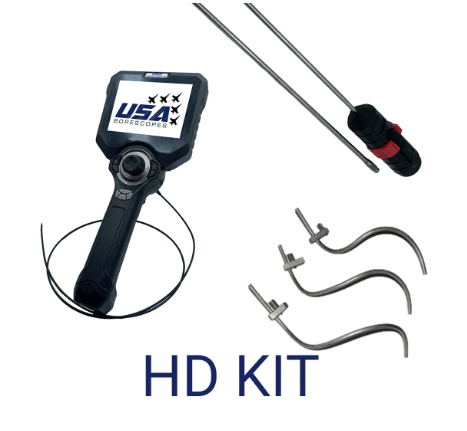
Industrial borescopes help aviation professionals inspect critical components safely and efficiently, often without the time and risk that comes with unnecessary disassembly. The most effective systems are the ones that match the real inspection path, provide clear visuals that reduce ambiguity, and support documentation that others can review with confidence. When teams select the right scope and standardize their capture habits, they typically see faster decision cycles, fewer repeat inspections, and better consistency across shifts.
For aviation teams evaluating inspection tools and support, USA Borescopes offers a range of options geared toward demanding inspection environments. To discuss your inspection goals, access constraints, and the right configuration for your operation, readers can contact them for guidance and next steps.
About The Author
The author is an industry specialist in visual inspection and maintenance reliability with experience supporting aviation and industrial inspection programs. They focus on practical equipment selection, inspection technique, and documentation discipline that improves repeatability. Their perspective comes from field workflows and training support across multiple maintenance environments.
Great insights in this post, appreciating how scalable networking solutions can empower businesses while keeping costs predictable. The practical examples really helped clarify benefits for growing teams and diverse environments today Mikrotik Reseller africia.
Fantastic insights in this post—thanks for sharing. It’s refreshing to see practical tips and thoughtful perspectives that help readers navigate complex tech topics with clarity and confidence ubiquiti distributor africa.
I appreciated the insights in this post and found the discussion engaging, especially the practical tips shared. It’s great to see real-world experiences shaping thoughtful, helpful perspectives for everyone involved Dell Server distributor聽syria.
Great insights in today’s post; I’ve found that reliable, locally supported hardware can make a big difference for businesses planning upgrades, and thoughtful guidance from peers always helps when choosing trusted suppliers Authorized Dell Server Sellers Uae.
As screens keep improving, it’s amazing how small fixes can extend device life. Great point about choosing trustworthy technicians who understand delicate displays and offer clear, fair pricing every step of the way lcd repair services Manasquan nj.
Accidents happen, but a quick screen fix can save you time and money. I’ve found careful troubleshooting and a reputable repair service makes a huge difference for daily use and peace of mind Iphone 16 Plus Screen Repair.
Insightful post! It’s refreshing to see practical tips that blend strategy with creativity while keeping an audience-first approach. I appreciate the balanced view on consistency and experimentation to drive real results best digital marketing agency in bangalore.
It’s great to see practical ways campuses improve safety and convenience through thoughtful design, clear policies, and user-friendly systems that make everyday routines smoother for students and staff alike campus locker tracking system.
I’ve found these repairs helpful for keeping devices reliable, especially when everyday use reveals stubborn screen issues. Sharing practical tips and encouraging cautious handling can extend life and save money over time laptop screen replacement NJ.
The post highlights smart strategies and measurable metrics that help businesses grow online. I appreciate practical tips on optimizing ad spend, testing creatives, and aligning campaigns with core goals for lasting impact New York City Google Ads Agency.
Great post—really thoughtful insights from someone who genuinely understands how office tech can streamline collaboration. It’s amazing how simple tweaks in display setups can boost focus and engagement across teams Meeting Room Digital Signage.
요즘 모바일 슬롯 게임이 정말 인기가 많아졌네요. 언제 어디서나 쉽게 즐길 수 있어서 편리하고, 다양한 테마와 보너스 기능 덕분에 지루할 틈이 없어요. 기술 발전 덕분에 그래픽과 사운드도 뛰어나서 몰입감이 뛰어난 점이 특히 마음에 듭니다. 앞으로도 모바일 슬롯의 새로운 기능과 업데이트가 기대됩니다!
Ein sehr informativer Beitrag zur Suchmaschinenoptimierung! Besonders gut finde ich die praxisnahen Tipps, wie man durch gezielte Maßnahmen die Sichtbarkeit in Suchmaschinen verbessern kann. In der heutigen digitalen Welt ist Suchmaschinenoptimierung unverzichtbar, um langfristig erfolgreich zu sein und potenzielle Kunden effektiv zu erreichen. Weiter so!
Great insights on the importance of a robust crm for customer engagement! Leveraging the right crm for customer engagement not only streamlines communication but also helps build stronger relationships by personalizing interactions. It’s impressive how technology continues to evolve, making it easier for businesses to stay connected with their customers
I really appreciate the detailed insights shared about setting up an efficient electronics workbench. Having a well-organized and properly equipped electronics workbench makes a huge difference in troubleshooting and building projects. It’s impressive how the right tools and layout can enhance productivity and precision in any tech-related workspace. Thanks for
Great insights on the latest tech trends! If anyone is looking for a reliable partner, I highly recommend KodeMelon Technologies. They are a top-notch mobile app development company Bangalore, known for delivering innovative and user-friendly solutions. Their expertise truly stands out in this competitive market.