

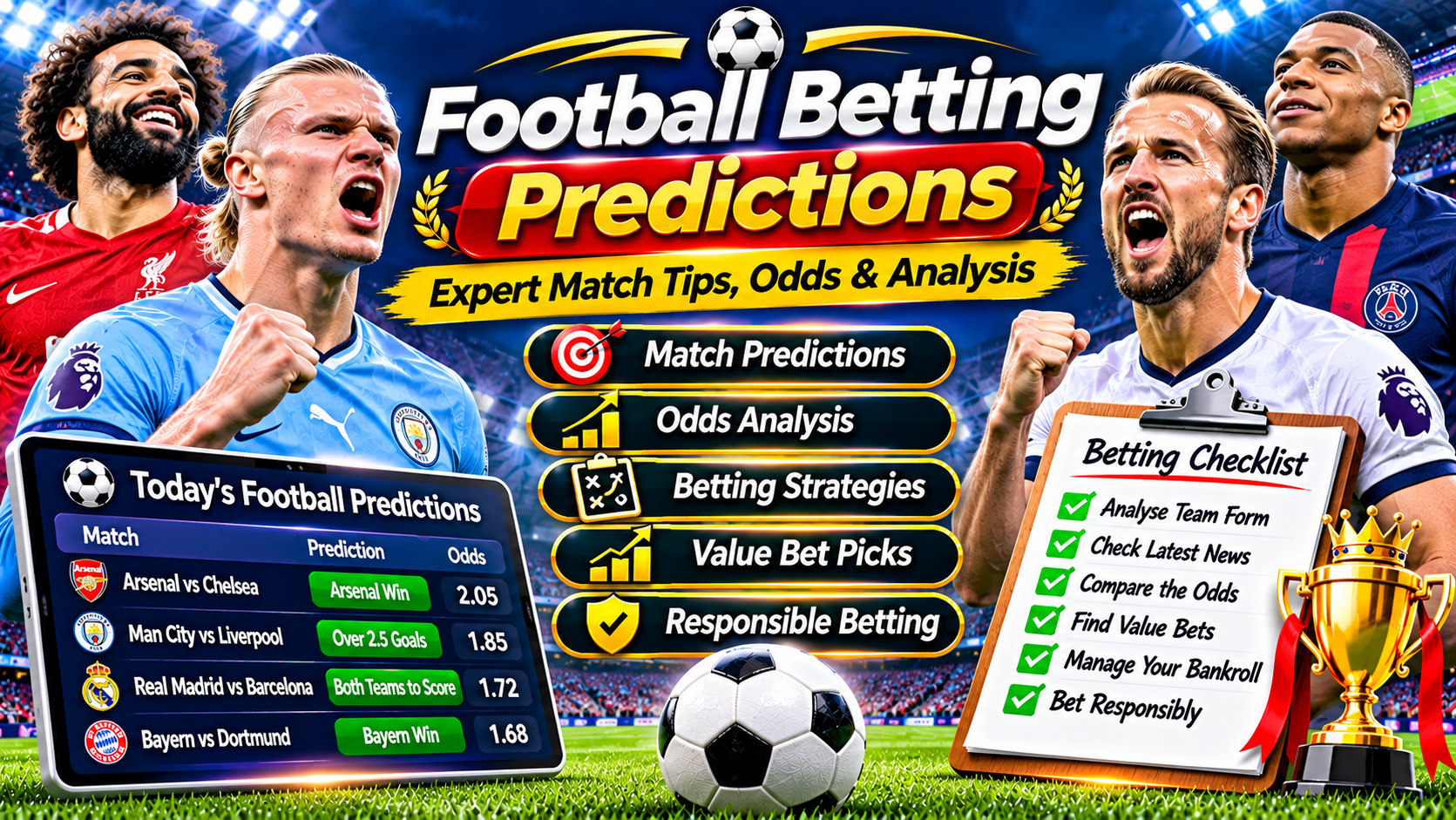
How to Approach Match Previews Like an Expert
Great betting decisions start with a disciplined match-prep routine rather than impulse selections. Begin by reviewing team news, expected lineups, and any role changes that could affect tempo or defensive structure. Watch how each side typically Football Betting Predictions builds attacks, because style mismatches often decide spreads, totals, and both-teams-to-score markets. If you can’t find reliable lineup information, scale down your stake or avoid markets that depend heavily on starters.
Next, translate what you learn into bet categories with clear logic. For example, a team that presses high and wins second balls tends to create more chances even if possession looks even. Meanwhile, a side that sits deeper may still score through set pieces, corners, and transition runs. When you match the game plan to the market type, your predictions become more defensible and less random.
Form, Matchups, and Tactical Signals That Move Odds
Team form matters, but “form” is broader than results. Look at shot profiles, conversion rates, and defensive stability under pressure to understand whether performances are likely to repeat. If a club has benefited from unusually high finishing, its x-chance creation may not support the same return. Similarly, a team conceding high-quality chances is often vulnerable even when the final score looks flattering.
Matchups can be even more important than season averages. Identify the duel that shapes the match—for instance, whether the favorite’s wide runners can exploit space behind the fullbacks. If the underdog’s midfield struggles to win the ball centrally, expect more direct attacks and faster transitions. Odds typically adjust when bookmakers anticipate these tactical edges, so your analysis should focus on the most likely pathways to goals.
Goal Markets, Odds Reading, and Value Recommendations
Goal totals and both-teams-to-score often correlate with chance volume and defensive matchups more than name recognition. For a value approach, compare implied probabilities from the odds with your own fair estimate. If the market price suggests a lower likelihood than your model indicates, that mispricing can become an expert recommendation.
Use a simple method to assess value without overcomplicating it. Assign a probability to key outcomes like “over” or “under” based on chance quality, then adjust for lineup confidence and tactical risk. For instance, if a team’s striker is expected to miss and the replacement is a worse finisher, the market may still price goals assuming continuity. Conversely, if a strong creator is returning, you may expect the same formation to produce higher shot quality than usual. This is where careful odds reading turns analysis into actionable selections.
Responsible Betting: Stake Plans and Risk Controls
Responsible betting protects your bankroll and improves decision quality over the long run. Set a staking unit that you can afford to lose without stress, then decide your maximum exposure before the first whistle. Avoid chasing after a losing streak because variance can be brutal in football, especially in low-scoring matchups. If you feel emotionally invested, step back and reduce bet size or pause altogether.
Risk controls should also guide what you bet. If your information is incomplete—such as uncertainty about starters or tactical roles—choose safer markets with more structural assumptions or skip the match entirely. Consider using smaller stakes on higher-variance outcomes like exact-score lines or heavy-longs shots. A consistent process, not a perfect prediction, is what separates sustainable bettors from one-off winners.
Conclusion
Using expert match analysis means combining tactical insight, realistic form evaluation, and odds interpretation into a repeatable workflow. Instead of relying solely on recent results, focus on how teams generate chances, defend threats, and respond to pressure. Then connect that understanding to goal markets and other bet types that reflect the likely story of the match. For best results, treat each wager as a calculated decision with a clear rationale and a defined risk plan. When you compare your fair probabilities to the price you’re offered, you create a pathway to value rather than randomness.