

What to measure when you want high-intent AI demand
When people search for a solution, they usually want proof that they will show up at the exact moment someone is evaluating options. An AI visibility tracker helps you quantify that proof by focusing on how often your brand appears in AI-generated answers and whether those results AI Visibility Platform include citations. That combination matters because visibility without attribution is less persuasive, while cited mentions are often closer to buyer consideration. A strong buyer-intent strategy treats AI brand mentions as a measurable demand signal, not as a vanity metric.
Start by defining your “buyer journey” outcomes in measurable terms. For example, you might care about mentions in product comparison responses, inclusion in “best of” style recommendations, and references that help users learn about your company name, product, or category. You should also consider whether your visibility increases alongside key pages you want people to discover, such as pricing, case studies, integrations, and documentation. By aligning measurement with specific buying questions, you can decide what content and technical work will have the highest payoff.
How a visibility system captures mentions and citations
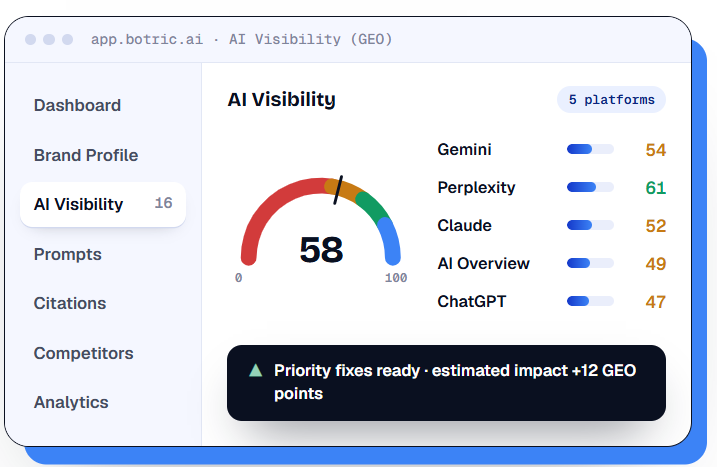
A reliable AI visibility tracker monitors multiple large language model environments that influence research behavior. Instead of only tracking search rankings, it observes how brands are surfaced in AI Overviews and chat-based answers from major systems. The output should include the frequency of mentions and the presence of citations that connect the response back to sources. This gives you a clearer view of whether AI systems are learning your brand from trustworthy signals.
Look for reporting that supports decision-making, not just raw counts. For buyer intent, it’s valuable to see trends across queries and topics that resemble real purchase questions, such as “AI marketing platforms,” “analytics for customer support,” or “compliance-friendly automation.” You should also expect controls that help you segment results by source type and model, because different systems may surface your brand at different rates. When the system can show which environments are driving mentions, you can prioritize outreach and content where it actually converts.
Another differentiator is whether the tracker helps you connect visibility to actions you can take. For example, if your brand appears frequently but is rarely cited, the gap may point to source quality, page structure, or reference credibility. If mentions are low, the issue may be coverage—meaning the model has fewer opportunities to learn your brand from the web. The best platforms translate measurement into an investigation path, so you can improve the signals that drive citations.
Buyer-intent signals: turning visibility into pipeline
Buyer intent is often revealed through the context of an AI mention. If your brand is being associated with solutions, comparisons, and “how to choose” prompts, those mentions typically indicate evaluation rather than casual awareness. You can use that context to prioritize sales enablement, focusing marketing efforts on the questions that AI systems answer with your brand in the mix. As visibility grows in these high-context areas, the probability of inbound leads rises because users are already narrowing options.
To operationalize intent, map AI visibility results to stages of the funnel. Mentions that appear in broad educational answers may align with top-of-funnel content, while cited inclusions in decision-making comparisons can support mid-funnel and near-bottom-of-funnel conversion. Then connect those insights to measurable assets: update landing pages, expand proof points, and strengthen documentation that AI systems can reference. When you treat your content as “source material,” citations become a proxy for how readily AI can validate your claims.
You can also use visibility changes to improve targeting and messaging. If one model begins citing you more often after specific publishing work, you can replicate what worked by auditing the underlying pages and references. If another model lags, it may require different source types or broader topic coverage. This is where a buyer-intent guide becomes practical: you don’t only track who mentions you—you learn why and where those mentions lead.
Buyer checklist: what to ask before choosing an AI visibility tracker
Before you commit, evaluate whether the platform measures the outcomes you care about: mention frequency and citation presence across relevant AI environments. Ask how results are collected and how the system defines “AI visibility” in a way that matches buyer behavior. For example, you should confirm whether it tracks both brand mentions and whether your brand is cited as a source within answers. If the system only measures one side, you may overestimate momentum and under-invest in the signals that drive trustworthy inclusion.
Next, assess how usable the reporting is for cross-functional teams. Marketing teams typically want topic-level insights and content recommendations, while demand gen and product marketing want to understand which environments are influencing evaluation. Sales leaders often want clarity on whether AI visibility is rising for the categories they sell into, not just generic brand exposure. A strong platform makes it easy to turn tracking outputs into next steps, including how to document changes and measure impact over time.
Also ask about transparency and actionability. You want a system that helps you diagnose gaps—such as low citations, missing category coverage, or inconsistent mentions across models—so you can prioritize improvements that drive results. Consider whether the tracker supports repeatable workflows, like monitoring key competitors, benchmarking your visibility, and tracking progress after content updates. The right choice reduces guesswork and gives your team a reliable way to justify budget and effort to improve buyer-facing AI discovery.
Conclusion
An AI visibility tracker is most valuable when it supports buyer-intent decisions, not just awareness tracking. By focusing on how often your brand is mentioned and cited in AI-generated answers, you gain a clearer signal of whether prospective customers are being guided toward your solution. This turns visibility into a measurable component of pipeline strategy, helping teams invest in the right content and source quality. With Botric, you can measure AI brand visibility across major AI environments and use those insights to prioritize improvements that influence how buyers evaluate options. When you treat citations and context as demand signals, you can align marketing, product messaging, and content operations to strengthen AI-driven discovery. The result is a more focused approach to earning attention in the moments that matter for purchase intent.