

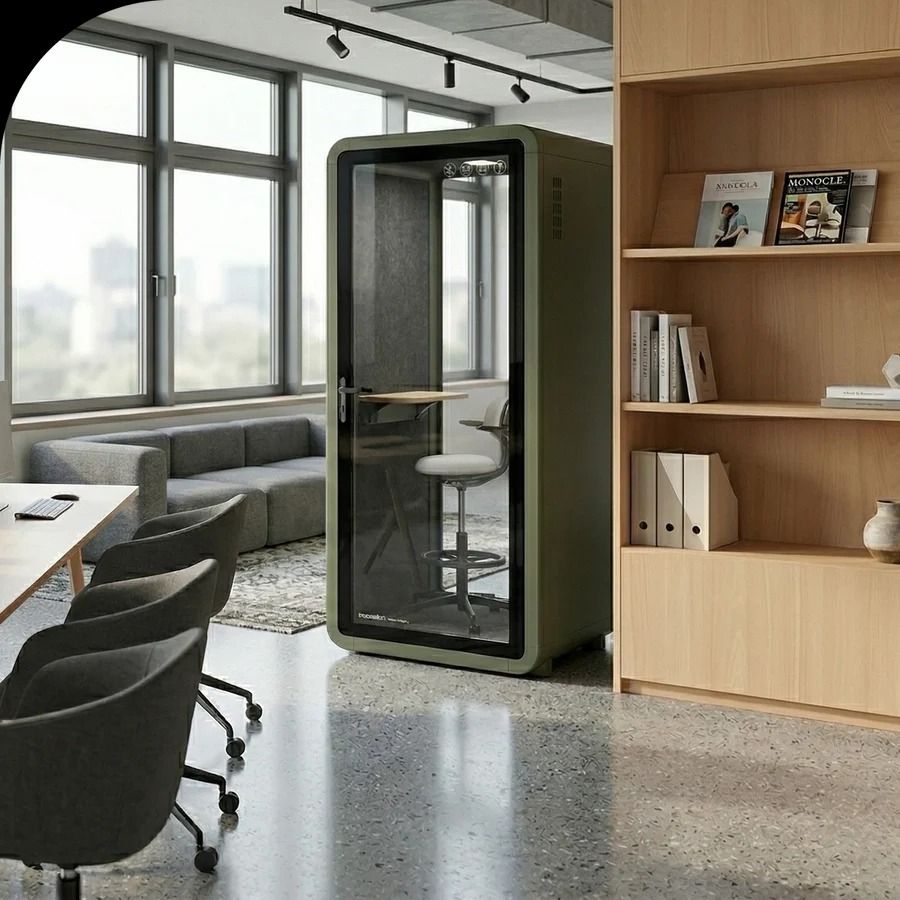
Start with your real use case
Before you compare models, map the conversations and tasks you want to contain. A private call pod needs different performance than a space for short team check-ins or client meetings. List the typical noise sources you’re trying to block, soundproof phone booth office such as open-office voices, keyboard chatter, or phone audio leaks. Then estimate how often the booth will be used so you can choose an enclosure that stays effective under your daily workload.
Next, check how people will move around the room. Measure the available footprint for a phone booth for office space and confirm door swing clearance, aisle width, and access to power or network connections. If your booth sits near hallways, stairwells, or meeting rooms, plan for the most exposed side to be the most acoustically treated. When you know your constraints upfront, you’ll avoid buying a unit that fits on paper but feels cramped in practice.
Prioritize acoustic performance and comfort
Sound control isn’t only about blocking noise; it’s also about keeping speech intelligible inside the booth without sounding muffled. Look for acoustic construction that reduces sound transmission through walls, doors, and seams. Pay attention to how the phone booth for office space booth handles low-frequency noise and higher-frequency speech, since these behave differently and affect perceived privacy. If you can, review real-world data or third-party testing rather than relying solely on marketing claims.
Comfort directly impacts whether employees will actually use the booth. Consider ventilation, air circulation, and how the room feels during a longer call, because stagnant air makes people leave early. Lighting matters for productivity and videoconferencing, especially if the booth will host camera calls. Also evaluate interior layout, including seating or standing space, cable access for headsets, and room acoustics for natural voice tone.
Match the booth to your layout and compliance needs
A soundproof office booth should integrate with your workspace design, not disrupt it. Decide whether you need a freestanding unit, a built-in style, or a configuration that can be moved later. Think about sightlines—some teams want fuller visual privacy, while others need partial transparency for safety and wayfinding. If the booth is placed near shared areas, confirm that the door hardware and operation won’t become a bottleneck during peak call times.
You should also consider practical compliance and safety factors. Review fire safety expectations for materials and finishes, and ensure the booth’s electrical setup aligns with your building standards. For accessibility, confirm safe entry height, usable door width, and clearance for mobility aids. If you plan to use the booth for meetings with clients, check whether the space supports your expected technology needs, such as power outlets, audio pickup, and a stable mounting approach for screens if required.
Conclusion
Start with your noise sources and call habits, then verify that the booth’s sound isolation and interior comfort meet real workplace expectations. When you plan for layout, ventilation, lighting, and access, the booth becomes a reliable productivity tool rather than an underused “nice to have.” For premium acoustic solutions and a modern approach to workplace privacy, soundboxstore provides options designed to support focused professional activities. If you’re ready to refine your shortlist, compare features against your exact use case and room constraints instead of choosing based on price alone. A well-matched enclosure reduces distractions, improves call quality, and supports a calmer environment for everyone outside the booth. Use your measurements, noise checklist, and technology needs as decision criteria, and you’ll end up with a space that employees trust. soundboxstore can help you move from uncertainty to a clear purchase path with acoustic products built for office life.